About the Giant Cuttlefish
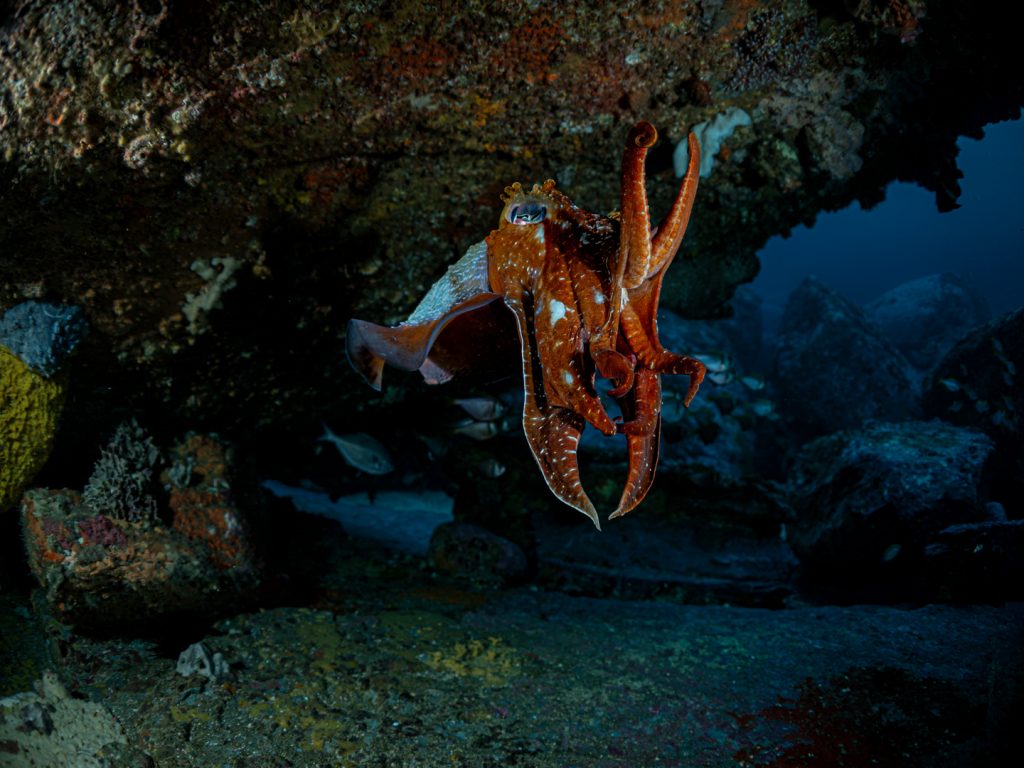
Giant Cuttlefish are among Australia’s most remarkable marine animals. Highly intelligent and capable of extraordinary colour and texture changes, they are one of my favourite underwater photography subjects. While best known for the spectacular annual breeding aggregation in South Australia, these fascinating cephalopods can also be encountered along parts of the New South Wales coastline, where every encounter offers a unique photographic opportunity
Masters of Disguise
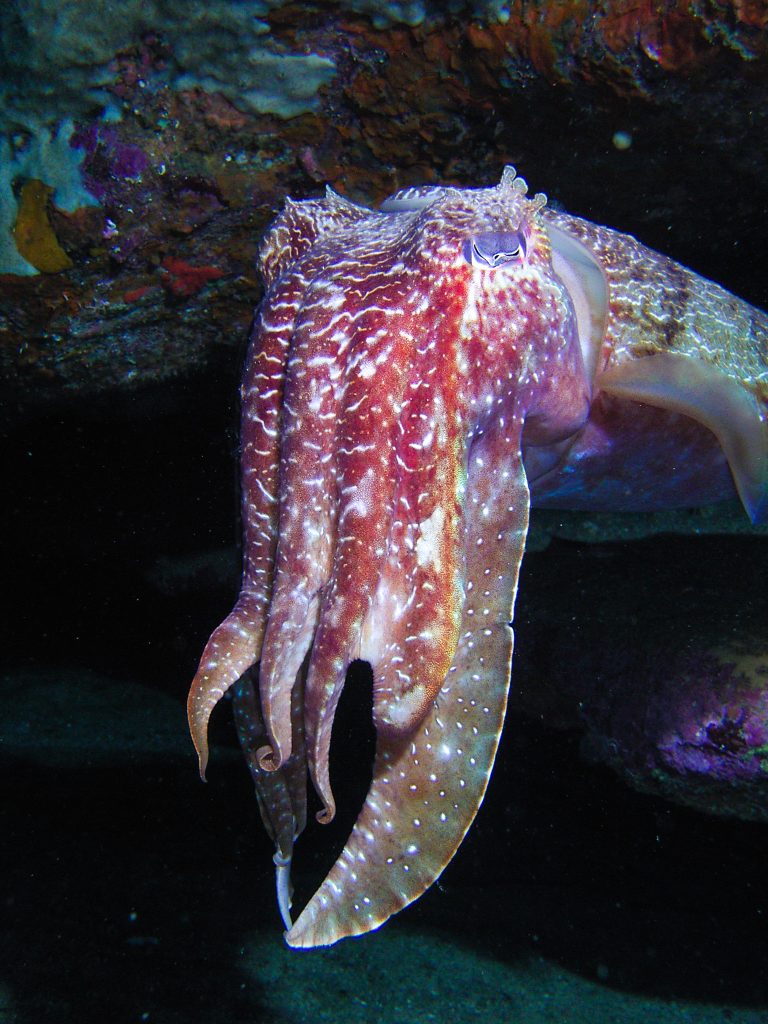
One of the Giant Cuttlefish’s most remarkable abilities is its extraordinary camouflage. In a fraction of a second it can change not only its colour, but also its pattern and even the texture of its skin to blend seamlessly with its surroundings. Specialised pigment cells called chromatophores work alongside reflective cells and tiny muscles that raise the skin into bumps and ridges, allowing the cuttlefish to disappear against rocky reefs, kelp or sand. This remarkable adaptation helps it avoid predators, communicate with other cuttlefish and ambush unsuspecting prey.
Intelligence Beneath the Surface
Giant Cuttlefish are widely regarded as some of the most intelligent invertebrates in the ocean. Their large, highly developed brains allow them to solve problems, learn from experience and adapt quickly to changing situations. Excellent eyesight, combined with an apparent curiosity about divers, often creates the feeling that they are observing you just as closely as you are observing them. Many underwater photographers find these encounters especially rewarding, as a calm and patient approach can reveal fascinating behaviours that might otherwise be missed.
Life Cycle
The Giant Cuttlefish has a relatively short lifespan of approximately one to two years, with many completing their life cycle in just one year. During this time, they undergo remarkable growth. After hatching from eggs approximately the size of a grape, young cuttlefish are already capable hunters, feeding on small crustaceans and fish. As they mature, males compete for the attention of females through spectacular colour displays and elaborate courtship behaviour. Following mating, females attach their eggs beneath rocky ledges and inside sheltered crevices, where they develop until hatching. After breeding, the adults reach the end of their natural life cycle, leaving the next generation to continue this remarkable underwater story.
Giant Cuttlefish in New South Wales
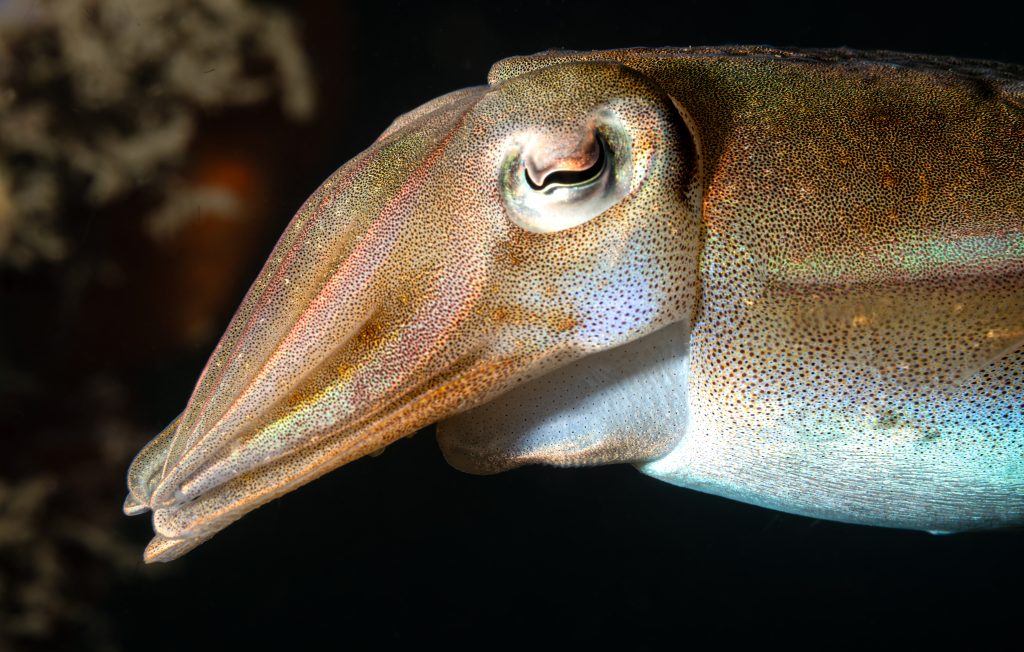
Athough South Australia’s famous breeding aggregation attracts worldwide attention, Giant Cuttlefish can also be encountered along parts of the New South Wales coastline. While sightings are generally less predictable, these intelligent cephalopods are regularly seen around rocky reefs and ledges where they hunt, shelter and interact with divers. Every encounter is different, making each dive a unique opportunity to observe their behaviour and photograph one of Australia’s most remarkable marine animals.
Through My Lens
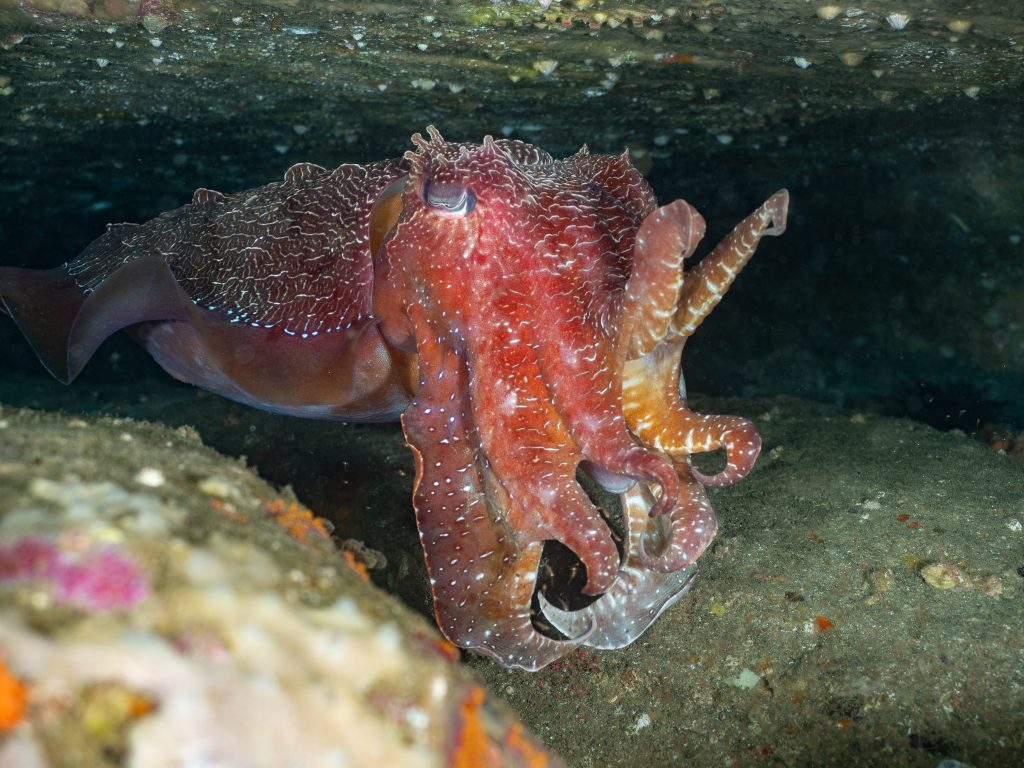
Over the years I’ve been fortunate to spend countless hours underwater observing Giant Cuttlefish in their natural environment. No two encounters are ever the same. Sometimes they approach with obvious curiosity, while at other times they vanish before your eyes using their incredible camouflage. Photographing them is always rewarding because their colours, behaviour and personalities seem to change from one dive to the next. Every image on this page represents a genuine moment beneath the surface and reminds me why these remarkable animals remain one of my favourite underwater subjects.
Explore More Beneath the Surface
Every photograph tells a story, and the Giant Cuttlefish is just one of the remarkable marine animals I’ve been fortunate enough to encounter over the years.
If you’ve enjoyed discovering the story behind your shirt, I invite you to explore more of my underwater wildlife photography from Sydney and beyond.
Phillip Hawley
Underwater Wildlife Photography